
A Tesla Cybercab appeared driving on a public road in New Zealand in footage that surfaced Friday, July 24, 2026, what appears to be the first video of the two-seat robotaxi moving under its own power outside the United States. The short clip, shot by Stephen Hillier, shows the gold prototype turning through a rural two-lane intersection, its body coated in road grime, a fitted tan cover over the roof, and a yellow New Zealand number plate on the tail.
The sighting closes the loop on a story EVXL readers already know the first half of. In mid-June, at least two Cybercabs were spotted on a car transporter on the South Island, and Tesla later confirmed the vehicles were headed to the Southern Hemisphere Proving Grounds near Cardrona for cold-weather testing. Five weeks on, a gold prototype is out of the compound and working New Zealand’s public roads.
Cybercab spotted winter testing in New Zealand.
— Sawyer Merritt (@SawyerMerritt) July 24, 2026
The Video Shows a Registered Test Car, Not a Trailer Queen
The short clip shows a Cybercab doing something we had not seen one do outside the US until now: rolling down an ordinary public road, plated, dirty, and clearly deep into a test program rather than posing for one. That dirt is the detail worth pausing on. Prototypes get filthy when they run daily loops between a proving ground and open roads, and this car looks like it has been doing exactly that since the transporter sighting in June.
The New Zealand plate matters too. Photos shared by local Tesla owner groups in June showed the arriving Cybercabs were left-hand-drive cars fitted with steering wheels, even though the production robotaxi was unveiled without a wheel or pedals. New Zealand drives on the left, so a left-hand-drive prototype with manual controls and local registration points to one purpose: a human test driver logging validation miles on real winter roads, not a regional launch.
Tesla builds both configurations. As EVXL reported when the EPA certification filing surfaced in June, the certified car is a front-wheel-drive single-motor design rated at 219 hp, and the company has kept a steering-wheel variant in the mix for markets and test programs that require one.
New Zealand Is Tesla’s Standing Winter Laboratory
The Southern Hemisphere Proving Grounds, sitting between Queenstown and Wanaka near the Cardrona ski field, gives automakers sub-zero test conditions from June through August while facilities in Scandinavia and Canada sit in summer thaw. The facility’s winter season typically runs June through late August, and Tesla is a repeat customer.
EVXL has covered this pattern before. In July 2023, Model 3 Highland prototypes and camouflaged Cybertrucks turned up at the same facility for the same seasonal reason. Three years later the program is running the same playbook with a far stranger vehicle.
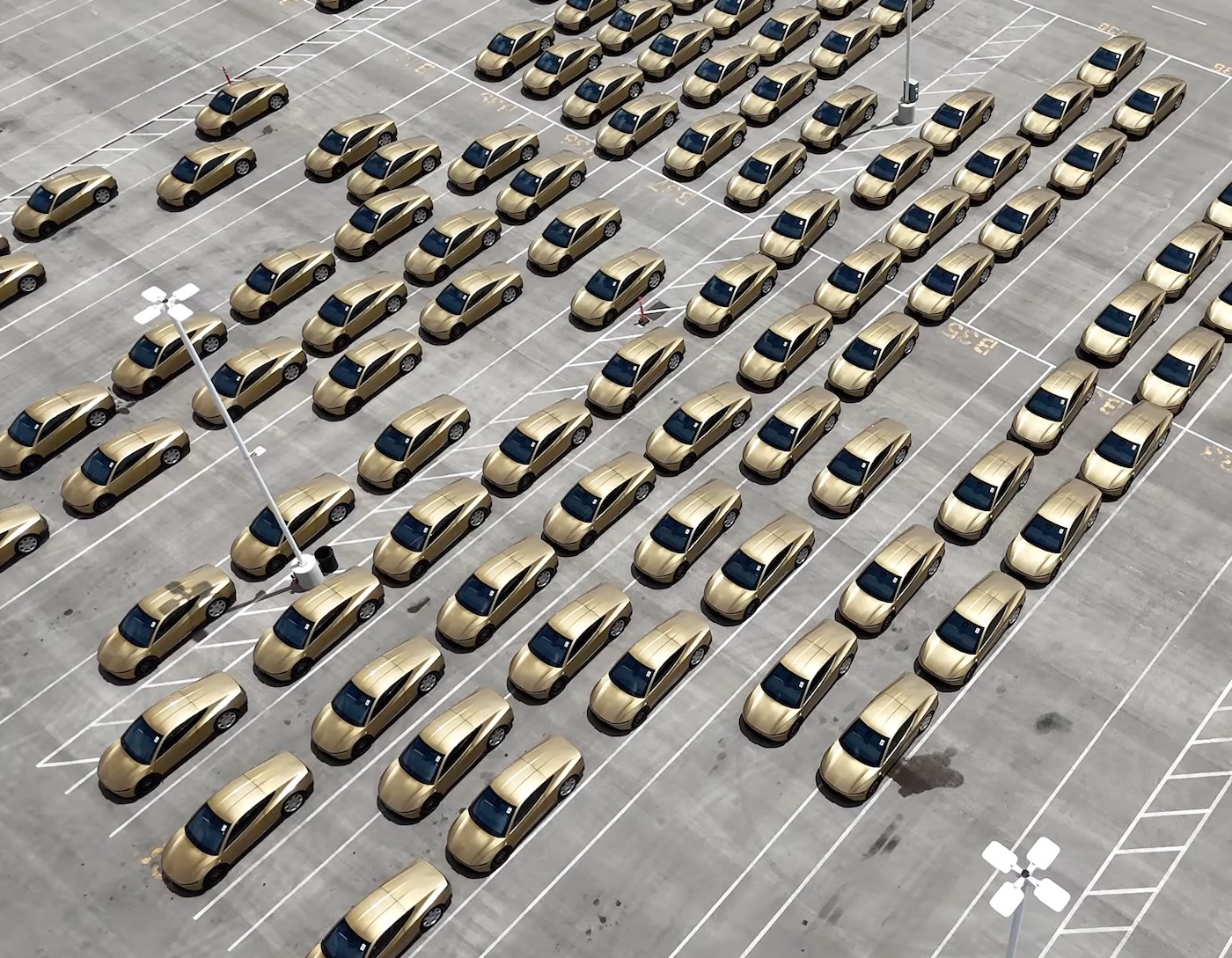
For the Cybercab, the winter checklist is longer than usual. A camera-only autonomy stack has to prove it can read frost-glazed roads, low winter sun, and fogged lenses. Battery preconditioning, cabin heating, and traction behavior all need cold-weather data before Tesla can put the pedal-free version to work anywhere with an actual winter. The 245 finished units EVXL counted staged at Giga Texas on July 18 are waiting on exactly this kind of validation work.
EVXL’s Take
This is the most encouraging Cybercab footage I’ve seen all year, and it’s encouraging precisely because it’s boring. A dirty prototype with a legal plate grinding out miles on a rural road is what a real engineering program looks like. It’s the unglamorous opposite of the choreographed 2024 unveiling, and it’s worth far more.
But let’s be clear about what this is not. A left-hand-drive car with a steering wheel and a human aboard, in a country that drives on the left, is not a New Zealand robotaxi launch. It’s Tesla borrowing winter. The company that promised full autonomy “next year” every year for a decade is now doing the slow, dusty validation work it should have front-loaded years ago, and I’d rather see this than another demo night.
The SHPG season runs through the end of August. Expect more sightings like this one on Central Otago roads over the next five weeks, and judge the program by how many show up. A test car you keep seeing is a test program that’s actually running.
Sources: CarExpert, MotoringNZ. Video by Stephen Hillier.
EVXL uses automated tools to support research and source retrieval. All reporting and editorial perspectives are by Haye Kesteloo.